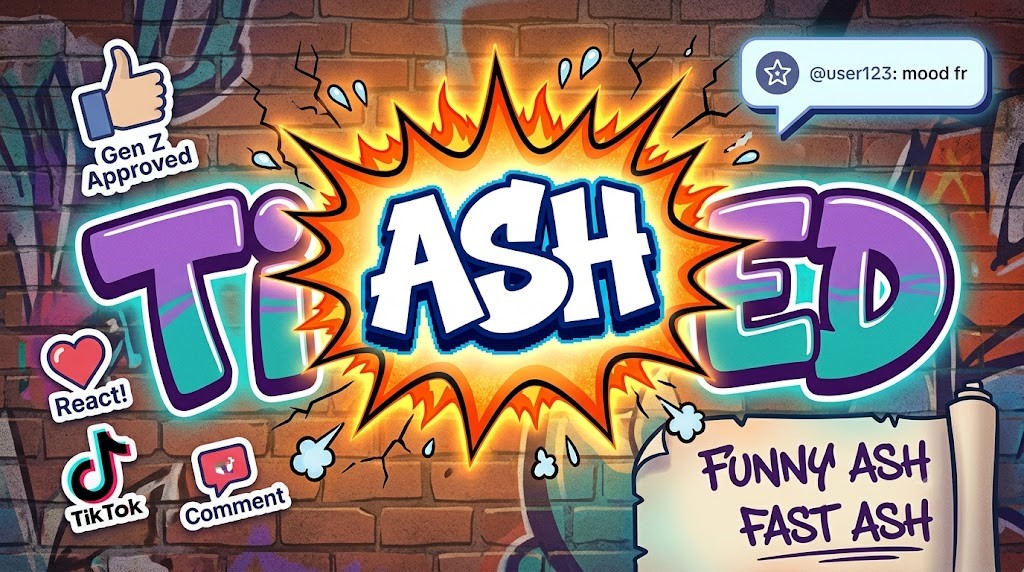
“Ash” is not about fire. It is about emphasis. The word is Gen Z’s compressed version of “as hell.” You do not say “ash tired” in front. You say “tired ash.” The grammar is rigid. Funny ash. Slow ash. Expensive ash. It is casual, efficient, and more aggressive than “very” without being as crude as “AF.” I first started seeing it in TikTok comments around late 2023. My little cousin texted me “bored ash” last weekend.
Ash vs AF vs mad
They all intensify, but the vibes differ. “AF” is explicit. It hits hard. “Mad” is regional. New Yorkers use it naturally. Everyone else sounds like they are trying too hard. “Ash” is softer than AF but more internet-native than mad. It feels like something you would type, not say out loud. Though people do say it out loud now. Which is weird.
The other difference is placement. “Mad” goes before the adjective. “Mad funny.” “Ash” goes after. “Funny ash.” That rule is non-negotiable. Break it and you look like a bot.
Where it actually goes
After the adjective. Always. “I am hungry ash.” “That test was hard ash.” You cannot get fancy with it. “Ash hungry” is wrong. Some people try to use it as a standalone. “How are you?” “Ash.” Do not do that. The word needs something to cling to. Think of it as a suffix. A grammatical parasite. It cannot survive alone.
You will see it in comments like “that transition was smooth ash” under any satisfying video.
@username: that test was hard ash 💀
Reply: “Hard ash. I am not gonna lie.” That is the format. That is the grammar.
Related slang
AF — The older, more explicit cousin of ash. Same job, different uniform.
Mad — The regional rival. New Yorkers say “mad funny.” The internet says “funny ash.”
Lowkey — Ash is loud. Lowkey is quiet. They are opposites.