Usage & Context
“Bed rotting” is a 2023-2026 TikTok trend describing the deliberate practice of staying in bed all day for rest and recuperation, not due to illness. Officially recognized by Merriam-Webster in April 2026, the term has sparked debate about self-care versus mental health warning signs.
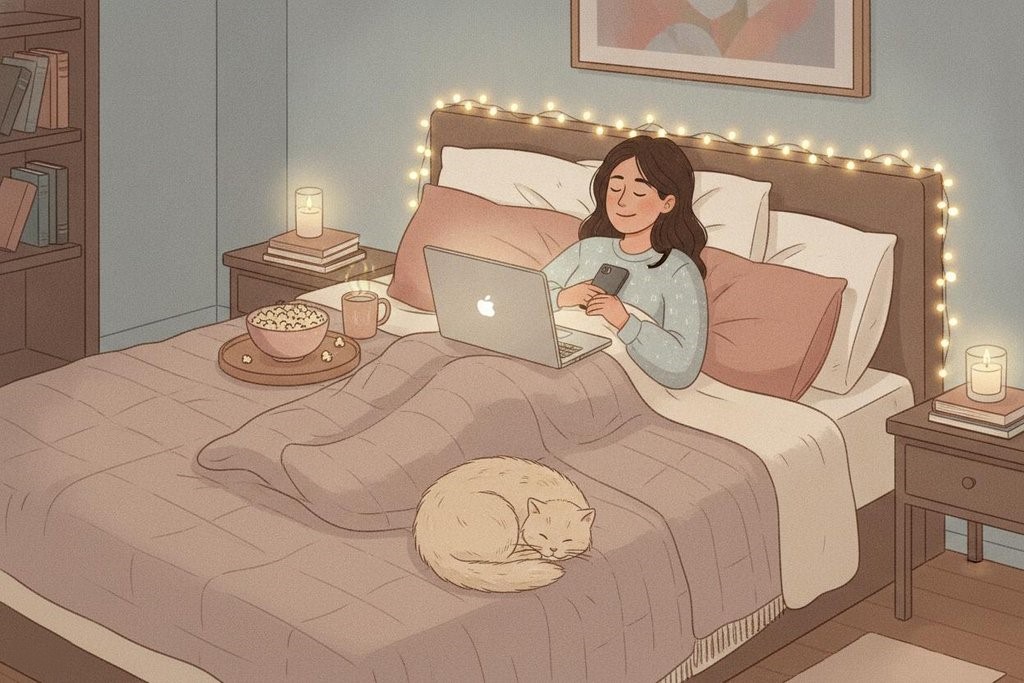
On TikTok, bed rotting content ranges from unapologetic confession videos (“I’ve been bed rotting for 48 hours and I have zero regrets”) to aesthetic montages of cozy blanket forts and snack hauls. The hashtag #bedrotting has hundreds of millions of views, with strongest adoption among Gen Z (ages 16–28) in the US, UK, and Australia. The trend resonates particularly with students, remote workers, and anyone feeling burnt out by productivity culture.
The term functions as both a self-deprecating joke and a genuine wellness strategy. Friends text each other “I’m bed rotting today, don’t expect replies” the way previous generations might have said “I’m taking a mental health day.” The difference is that bed rotting drops the pretense — there’s no wellness industry aesthetic, no Instagram-worthy self-care routine. Just staying in bed.
Usage note: Suggesting that someone “should go bed rot” can feel dismissive if they’re dealing with serious mental health issues. There’s a difference between choosing to rest and being unable to leave bed.
TikTok Caption: “Sunday plans: bed rotting with my emotional support water bottle and a 12-hour Netflix queue. No apologies.”
Group Chat: “Friend: Want to go out tonight? / Me: Can’t, I’m bed rotting until further notice / Friend: Respect. Send snacks.”
Tweet: “My bed rot schedule: 9am-12pm (scroll), 12pm-2pm (nap), 2pm-5pm (snack), 5pm-8pm (existential dread), 8pm (sleep). Repeat.”
Origin Story
The term “bed rotting” first appeared on TikTok in 2023 as a humorous, self-deprecating way to describe what previous generations might have called a “lazy day” or “mental health day.” But the rebranding matters — “bed rotting” frames the behavior as an intentional act of resistance against hustle culture, not as personal failure. You’re not being lazy; you’re actively choosing to decompose in comfort.
Merriam-Webster officially recognized “bed rotting” in April 2026, defining it as: “the act of spending many hours in bed during the day often with snacks and other comforts as a voluntary retreat from stress or responsibilities.” The dictionary’s inclusion of “voluntary” is key — bed rotting is a choice, not a symptom. This distinction has made the term both celebrated (as radical self-care) and criticized (as glorifying avoidance behavior).
The rise of bed rotting reflects a broader generational rejection of the “rise and grind” mentality that dominated millennial culture. Where millennials popularized “self-care Sundays” with face masks and meditation apps, Gen Z prefers something more honest and less performative — just staying in bed. No products to buy, no wellness industry middleman. Just you, your bed, and permission to do absolutely nothing.
Cultural Significance
GEBILAOWANG’s take: what’s clever about “bed rotting” is the linguistic framing. “Rotting” sounds like decay, which should be negative — but in this context, it’s reclaimed as a form of radical rest. The term acknowledges that doing nothing feels almost transgressive in a productivity-obsessed culture, which is exactly why it resonates. The debate over whether bed rotting is healthy self-care or concerning withdrawal behavior reflects a larger cultural uncertainty about what rest should look like in 2026.
The mental health community is divided on the trend. Psychologists generally agree that occasional bed rotting is harmless self-care, but warn that frequent or extended bed rotting (more than one day per week) can be a sign of depression, anxiety, or burnout. The key differentiator is whether you choose to bed rot (self-care) or feel unable to leave bed (potential symptom).
Bed rotting also represents a pushback against the commodification of wellness. Unlike “self-care” which has been co-opted by brands selling expensive products, bed rotting requires nothing — no purchases, no aesthetic, no performance. That anti-capitalist undertone is part of what makes it appealing to Gen Z.
Related Slang
- Duvet day — the British equivalent, though less extreme and less culturally loaded
- Mental health day — more clinical framing of the same behavior
- Lazy day — the guilt-laden predecessor; bed rotting reclaimed the concept
- Goblin mode — another Gen Z term for rejecting societal expectations of productivity
Frequently Asked Questions
What does bed rotting mean?
It’s the intentional practice of staying in bed all day to rest and recharge — not due to illness, but as a deliberate choice to disconnect from responsibilities and productivity culture.
Is bed rotting the same as being lazy?
Not in the way Gen Z frames it. “Lazy” implies guilt and failure; “bed rotting” frames the behavior as radical self-care. The linguistic rebranding is the whole point.
Is bed rotting healthy?
Occasional bed rotting is generally considered harmless self-care. However, frequent or extended bed rotting (more than one day per week) can signal depression, anxiety, or burnout. The key is whether you choose to rest or feel unable to leave bed.
Where did bed rotting come from?
It emerged on TikTok in 2023 as a humorous way to describe staying in bed all day. Merriam-Webster officially recognized it in April 2026, cementing its place in mainstream vocabulary.
Pronunciation
/bɛd ˈrɒtɪŋ/
Sources
- Merriam-Webster — “Bed Rotting” Official Definition https://www.merriam-webster.com/dictionary/bed%20rotting
- Parents.com — What Is ‘Bed Rotting’? https://www.parents.com/bed-rotting-tiktok-trend-8647178.html