Usage & Context
“Choppelganger” is a 2026 TikTok slang blend of “chopped” (unattractive) and “doppelganger” (lookalike), describing someone who looks just like you but is noticeably less attractive. The term originated from a viral typo tweet and quickly became a staple of comparison-based humor on the platform.
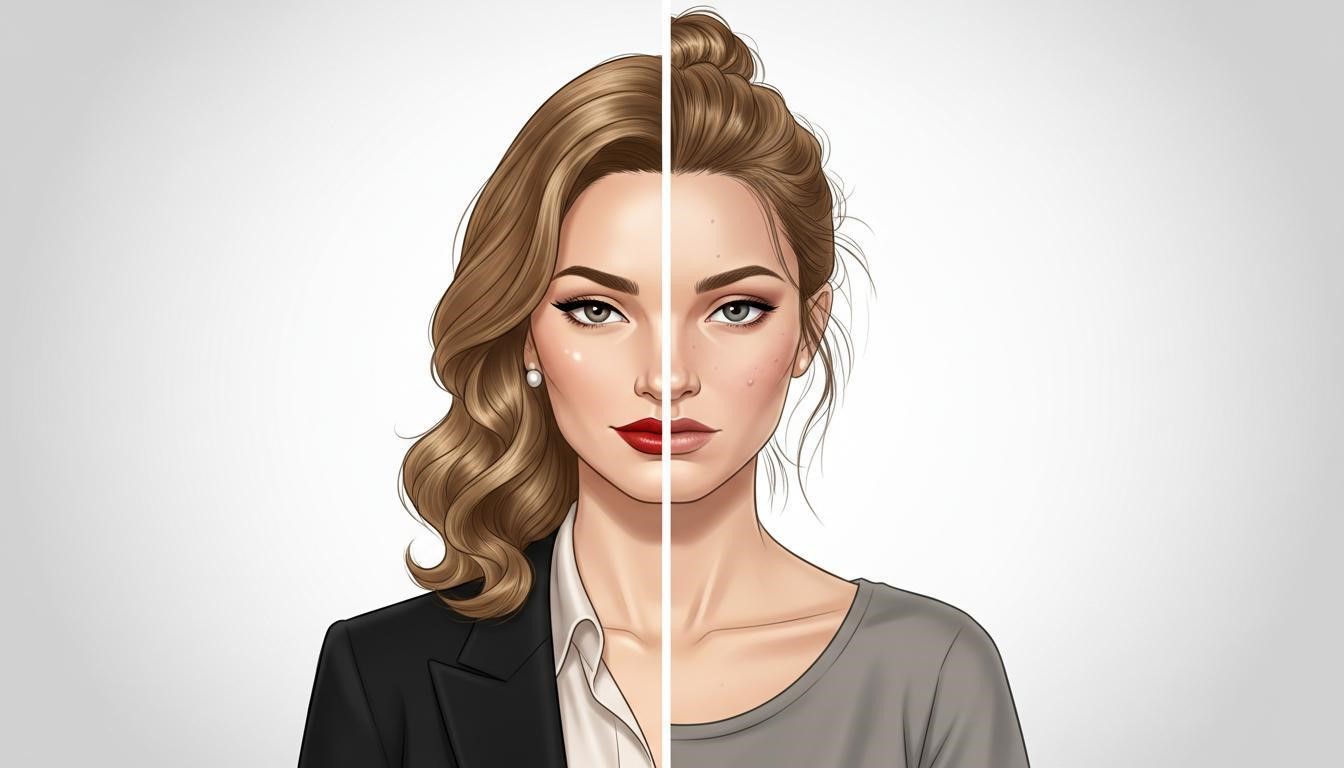
On TikTok, “choppelganger” appears in side-by-side photo comparisons, doppelganger filter videos gone wrong, and self-deprecating captions about unflattering photos. The word’s power comes from its specific emotional territory — a doppelganger is neutral or unsettling, but a choppelganger is actively distressing. It’s the photo your friend takes from a bad angle. It’s the security camera footage. It’s you, but processed through the least flattering version of reality.
The term is primarily used by Gen Z (ages 13–22) who are steeped in comparison culture. By April 2026, TikTok users were using “choppelganger” in captions without referencing its origin — treating it as an established word rather than a meme.
Usage caution: The word requires two people: one who looks better and one who looks worse. Celebrating the concept necessarily means creating a hierarchy of appearance. Use it self-deprecatingly rather than targeting others.
Celebrity Comparison: “Dua Lipa’s choppelganger works at my Target”
Self-Deprecating: “My front camera is just my choppelganger factory”
Social Observation: “Every family reunion has at least one choppelganger situation”
Competitive Humor: “You think that’s bad? I found my choppelganger on a wanted poster”
Origin Story
On the morning of March 13, 2026, an X user posted a selfie comparison with a celebrity. The caption was supposed to read “my doppelganger” — but autocorrect had other plans. What actually posted was: “Just saw someone who looks exactly like me but chopped… my choppelganger 😭”
The typo was too perfect to be a mistake. Within hours, the post had 50,000 retweets. Within days, TikTok creators were filming “choppelganger reveals” — showing side-by-side photos of themselves with people who shared their features but looked, somehow, fundamentally worse. The word’s organic adoption suggests the concept it names is genuinely useful, not just funny.
Cultural Significance
TikTok and Instagram have created an entire genre of content around lookalike comparisons — “who wore it better,” “find your celebrity twin,” “doppelganger filter” videos. “Choppelganger” arrived at the exact moment when this comparison culture needed a word for its darker cousin: the person who looks like you but represents everything you’re afraid you might actually look like.
“Choppelganger” is what’s called a blended compound — a portmanteau that fuses two complete words rather than truncating them. The result keeps the full semantic weight of both halves: the uncanny resemblance of “doppelganger” plus the aesthetic dismissal of “chopped.” What’s notable is how quickly the word moved from joke to functional vocabulary — by April 2026, it was being used without referencing its origin.
GEBILAOWANG’s take: the word is at its best when self-deprecating — when you’re calling yourself the choppelganger. At its worst, it’s a tool for publicly ranking strangers’ appearances. The distinction matters, and the word’s long-term survival depends on which usage pattern dominates. The concept of a “bad version of yourself” is universally relatable, which gives the word serious staying power if it stays in the self-deprecating lane.
Related Slang
- Chopped — the “unattractive” half of the blend; general-purpose ugliness descriptor
- Doppelganger — the original lookalike concept; neutral or unsettling
- Mid — generic term for average appearance; less specific than choppelganger
- Glow down — the process of becoming less attractive over time
Frequently Asked Questions
What does “choppelganger” mean?
It’s a blend of “chopped” (unattractive) and “doppelganger” (lookalike). Someone who looks just like you but is noticeably less attractive — like a bad version of yourself.
Where did “choppelganger” come from?
It originated from a viral typo tweet on March 13, 2026. An X user meant to write “doppelganger” but autocorrect created “choppelganger,” and the internet ran with it.
Is “choppelganger” just a mean way to call someone ugly?
It can be, but it’s more specific than that. “Chopped” is general unattractiveness. “Choppelganger” requires the resemblance element — it’s about looking like someone specific but worse.
Can you have a “hot choppelganger”?
Some users have tried this inversion, but it hasn’t caught on. The word’s emotional core is the negative comparison. “Upgrade-ganger” and “glow-ganger” have been proposed but feel forced.
Pronunciation
/ˈtʃɒpəlɡæŋər/
Sources
- Know Your Meme — “Choppelganger” https://knowyourmeme.com/memes/choppelganger
- TikTok Creative Center — Trending Keywords & Hashtags Dashboard https://ads.tiktok.com/business/en-US/solutions/tiktok-creative-center