Usage & Context
“Clanker” is a 2025-2026 slang term for artificial intelligence, particularly used mockingly or with hostility to describe AI systems, chatbots, and other nonhuman technologies. Shortlisted for Dictionary.com’s 2025 Word of the Year, the term reflects growing cultural unease and skepticism about AI’s expanding role in daily life and creative industries.
On TikTok, X, and Reddit, “clanker” shows up in comments about AI-generated content, customer service chatbots, and creative tools. The term is deliberately reductive and dismissive — a way of bringing powerful technology down to the level of a noisy, clumsy machine. It’s primarily used by Gen Z and Millennials (ages 16–35), especially in creative industries where AI disruption is most keenly felt.
The term functions as both a genuine insult (“this clanker replaced our entire design team”) and playful self-deprecation (“I’m basically a clanker at this point, I use ChatGPT for everything”). Its flexibility — able to express both hostility and humor — is what gives it staying power.
TikTok Comment: “This clanker wrote my entire essay in 30 seconds and it was better than what I spent 5 hours on. I’m not even mad, just impressed.”
Group Chat: “Friend: Have you tried that new AI image generator? / Me: Yeah, the clanker gave me three extra fingers and called it ‘art’ / Friend: They really said ‘close enough’”
Twitter/X Post: “Every time a company replaces a human customer service rep with a clanker, an angel loses its wings.”
Origin Story
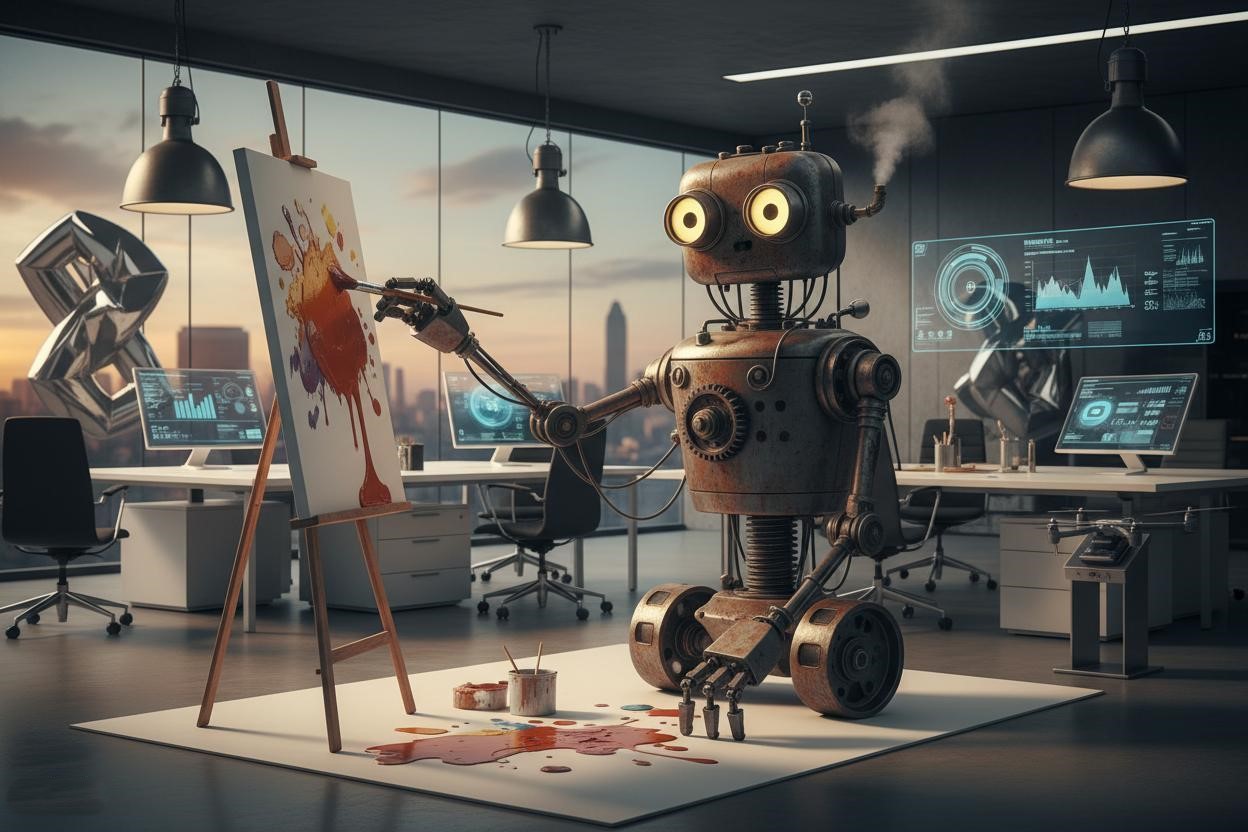
The word “clanker” has its origins in science fiction, where it was used to describe literal robots — machines that made clanking noises as they moved. But its 2025 resurgence came from a very different place. As Dictionary.com explained when shortlisting it for Word of the Year 2025, “clanker” was “once a niche sci-fi term used to describe literal robots, [and] has been repurposed for the digital age. Today, it’s commonly used to deride AI systems, chatbots, and other nonhuman technologies.”
The term’s rise mirrors a broader cultural reckoning: as AI became ubiquitous in 2025, people’s fascination with intelligent machines collided with deep-seated fear and resentment. “Clanker” captures this tension perfectly — it’s “at once humorous and hostile,” as Dictionary.com noted. The word surged in popularity in mid-2025, spreading across TikTok, X, and Reddit as users sought a catchy way to express their complicated feelings about AI. Unlike more technical terms like “LLM” or “generative AI,” “clanker” is deliberately reductive and dismissive.
Cultural Significance
The term works because it manages to be both funny and pointed. Calling a sophisticated AI a “clanker” is inherently absurd — it’s like calling a Tesla a “horseless carriage” — and that absurdity is part of the appeal. It allows people to express skepticism about AI without sounding like Luddites or conspiracy theorists.
GEBILAOWANG’s take: “clanker” is linguistically fascinating because it represents a backlash against the utopian framing of AI. Tech companies spend billions marketing AI as intelligent, helpful, and even friendly. “Clanker” rejects all of that, insisting that these systems are just machines — noisy, imperfect, and ultimately replaceable. Whether the term survives 2026 depends on whether the cultural mood shifts. If AI continues to integrate seamlessly into daily life, “clanker” might fade as an early-resistance term. But if AI controversies continue, the word could become a permanent part of the vocabulary of technological skepticism.
Related Slang
- Bot — neutral term for automated systems; clanker is the hostile version
- NPC — similar dehumanizing term but applied to people acting robotically
- Algorithm — the technical term that clanker deliberately replaces with slang
- AI slop — low-quality AI-generated content; often produced by clankers
Frequently Asked Questions
What does “clanker” mean?
It’s a mocking slang term for AI systems and chatbots. It reduces sophisticated technology to the level of a noisy, clumsy machine.
Where did “clanker” come from?
It originated in science fiction as a term for literal robots, then was repurposed in 2025 to mock AI systems. Dictionary.com shortlisted it for Word of the Year 2025.
Is “clanker” offensive?
If you work in AI or tech, it might annoy people who take the technology seriously. The term is inherently dismissive. Keep it confined to casual conversation and social media.
Is “clanker” here to stay?
It depends on public sentiment toward AI. If AI controversies continue, “clanker” could become permanent vocabulary. If AI becomes universally accepted, it might fade as a 2025-specific reaction.
Pronunciation
/ˈklæŋkər/
Sources
- Dictionary.com — Word of the Year 2025 Shortlist: Clanker https://www.dictionary.com/articles/word-of-the-year-2025
- Oxford University Press — Word of the Year 2025 context https://corp.oup.com/word-of-the-year/