Usage & Context
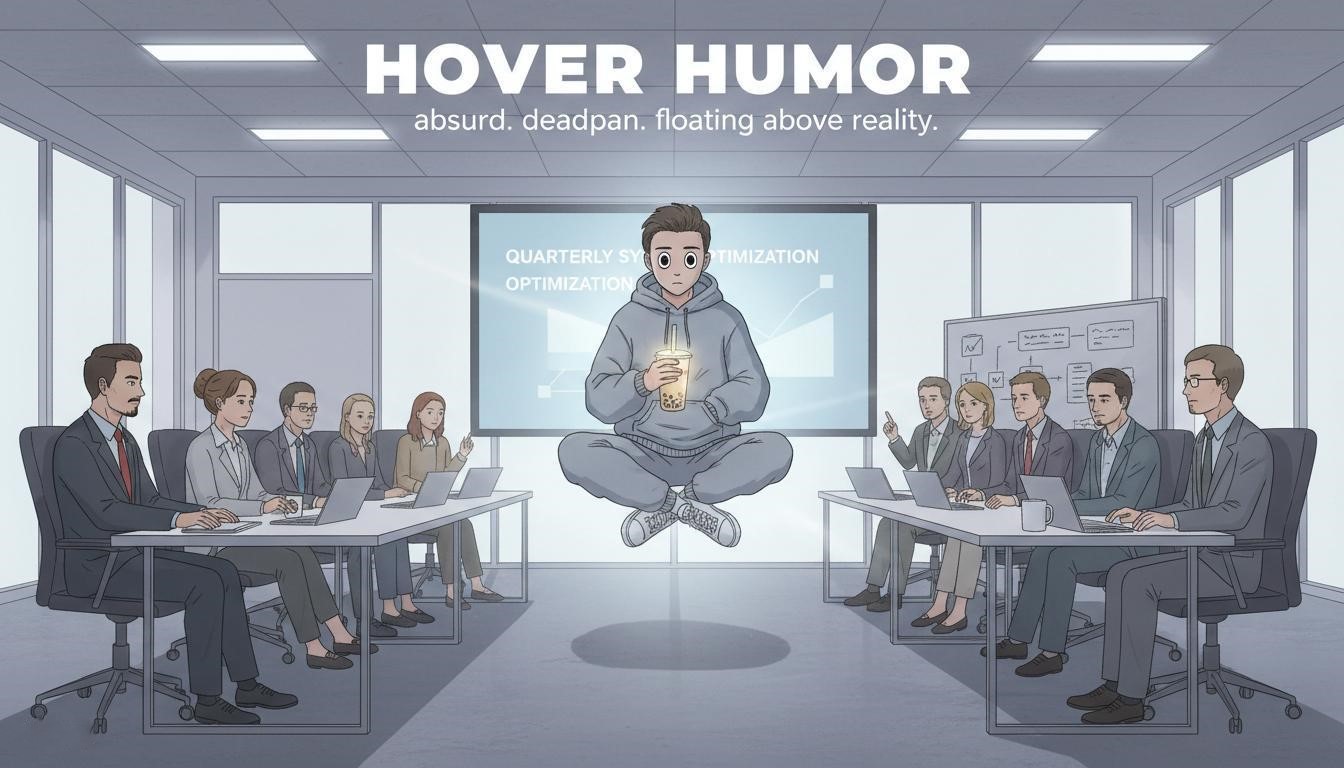
Hover humor describes a specific style of comedy that is deliberately light, nonsensical, and detached — jokes that almost make sense but don’t quite commit to a traditional punchline. Think of it as the comedic equivalent of a hovercraft: it floats, it moves, but it never fully lands. On TikTok, this shows up as random text-to-speech narrations over unrelated footage, absurd on-screen captions that feel like inside jokes with no context, or creators delivering deadpan observations about mundane objects.
The format thrives because it matches how Gen Alpha consumes content — fragmented, irony-soaked, and allergic to commitment. It’s not trying to make you laugh out loud; it’s trying to make you exhale slightly harder through your nose while you scroll. The jokes are so low-stakes that they can’t fail, which is precisely the point.
Hover humor works best in contexts where ambiguity is welcome. It falls flat in situations requiring clear communication or genuine emotional sincerity. The style also can’t be forced — the best hover humor feels completely effortless, like the creator wasn’t even trying to be funny.
Caption over a ceiling fan video: “The ceiling fan is just a room’s way of waving goodbye to the air.” [no reaction, no follow-up, just the fan spinning]
Text-to-speech over a grocery store clip: “They put the milk next to the cereal. That’s not organization, that’s matchmaking.”
Origin Story
The term crystallized in early 2026 when comedy creators needed a name for the specific type of anti-punchline humor that dominates Gen Alpha TikTok. It evolved from the broader “brainrot” comedy tradition but distinguishes itself by being intentionally gentle and non-confrontational. Unlike “shitposting” (chaotic and often aggressive) or traditional stand-up (structured and committed), hover humor maintains a soft, floating quality that never demands a reaction.
The format gained steady traction from March through June 2026, with the hashtag #hoverhumor accumulating tens of millions of views. The strongest adoption came from the US, UK, and Canada, primarily among users aged 13–21. The term gave a name to a comedy style that had already been circulating but hadn’t been formally identified, allowing creators to self-identify with the style and audiences to seek it out specifically.
Cultural Significance
Hover humor represents a generational shift in how comedy functions on social media. Where millennial humor tended toward structured jokes with clear setups and punchlines, and even early Gen-Z humor relied on irony and reference-heavy formats, Gen Alpha’s hover humor strips comedy down to its most minimal form. The joke isn’t in the content — it’s in the act of almost-making-sense itself.
GEBILAOWANG’s take: hover humor is what happens when Gen Alpha’s brains, rewired by infinite scrolling, start producing comedy that matches their attention patterns — fragmented, irony-soaked, and allergic to commitment. The format also reflects a broader cultural exhaustion with performative humor. In a landscape where every creator is trying to go viral with maximum-impact comedy, hover humor’s refusal to land hard feels like a quiet rebellion. It’s comedy that opts out of the engagement game while still playing it.
Related Slang
- Brainrot — the broader category of absurd, algorithm-shaped humor; hover humor is a specific, lighter sub-type
- Shitposting — chaotic, often aggressive anti-comedy; hover humor is softer and less confrontational
- Anti-humor — the comedy tradition hover humor descends from
- Dad jokes — deliberately unfunny in a different way; hover humor is absurdist, not corny
Frequently Asked Questions
How do you explain hover humor to someone out of the loop?
“It’s a type of weird, light joke that almost makes sense but doesn’t fully land — like comedy that floats by without a real punchline. Think random observations about everyday objects delivered with complete deadpan sincerity.”
Is hover humor the same as brainrot?
No, though they’re related. Brainrot is the broader category of absurd, algorithm-shaped humor. Hover humor is a specific, gentler sub-type that distinguishes itself by being intentionally soft and non-confrontational. Brainrot can be chaotic and aggressive; hover humor never demands a reaction.
Can anyone create hover humor?
Technically yes, but the style works best when it feels effortless. Forced hover humor is immediately recognizable and not funny. The best practitioners have a naturally detached, observational style that makes their absurd observations feel accidental rather than crafted.
Pronunciation
/ˈhʌvər ˈhjuːmər/
Sources
- SlangWatch — “TikTok Slang 2026: Comedy Terms” https://www.slangwatch.com/blog/tiktok-slang-2026
- TikTok Creative Center — Trending Dashboard https://ads.tiktok.com/business/en-US/solutions/tiktok-creative-center