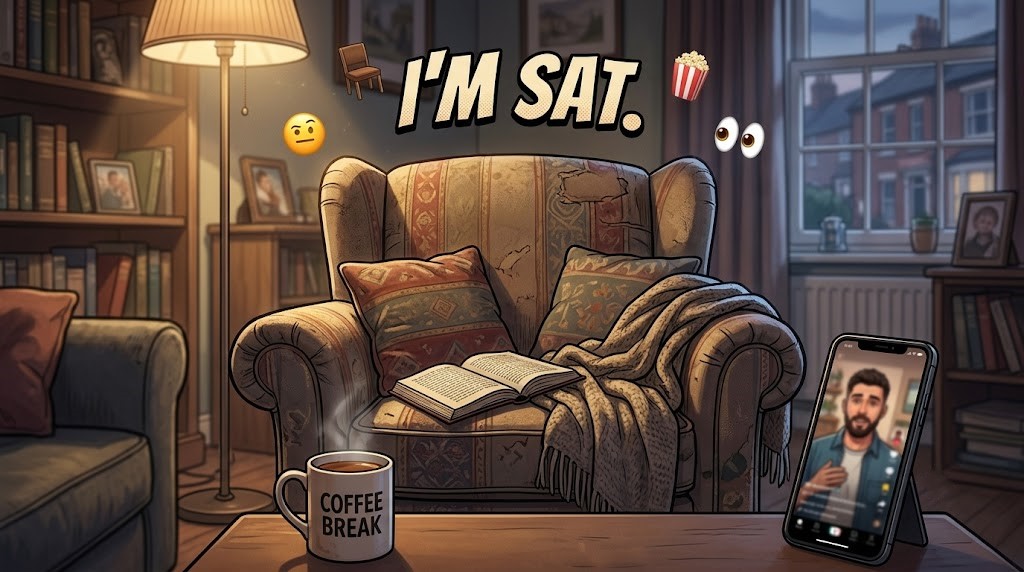
“I’m sat” looks like a typo the first time you see it. British English uses “sat” where Americans say “sitting,” and TikTok took that regional quirk and turned it into a whole mood. When someone comments “I’m sat” under a video, they mean they’re seated, ready, and not going anywhere. It’s agreement, anticipation, and submission to the content all at once.
When someone comments “I’m sat” under a video, they mean they’re physically seated, mentally ready, and emotionally committed to not going anywhere until this story reaches its conclusion, whatever that may be. I first saw it under a UK creator’s multi-part storytime about a disastrous first date in early 2024. The comment section was full of “I’m sat.” Not “following” or “continue,” just “I’m sat.” It felt different. More permanent. Like the person had pulled up a chair and committed to watching the drama unfold. By 2024 it had crossed to American TikTok, where people use it without knowing the British grammar behind it.
The accidental origin of I’m sat
The phrase started in British English, where stative verbs like “sat” and “stood” are used in progressive contexts that American English would reject. “I’m sat here” is standard in Manchester, bizarre in Manhattan. TikTok creators from the UK brought it to the platform naturally, and American viewers adopted it because it sounded cooler than “I’m sitting.”
The shift from grammar to mood happened around 2023. UK TikTokers started using “I’m sat” not just to describe position but to announce presence. “I’m sat and ready.” “I’m sat for this.” The verb became a declaration of intent. American adoption accelerated the meaning drift. By 2024, “I’m sat” could mean “I’m shocked,” “I’m convinced,” or “I’m entertained,” depending on context.
Using I’m sat like a native
Context is everything. Under a storytime video, “I’m sat” means “continue, I’m listening.” Under a controversial take, it means “I’m seated for the argument, popcorn ready.” Under a transformation reveal, it means “I waited for this and I’m not disappointed.”
You can’t really say it wrong, but you can say it at the wrong time. Dropping “I’m sat” under a 15-second dance video feels like bringing a lawn chair to a sprint. It needs narrative weight. The best usage comes under multi-part storytimes, apology videos, or any content where the creator promises a payoff.
There’s also a spelling war. Some people write “im sat” without the apostrophe, which purists hate but everyone understands. The lowercase version feels more casual, more comment-section native. I personally prefer the apostrophe version, but I’m probably in the minority. Both work.
Frequently Asked Questions
What does “I’m sat” mean on TikTok?
It means you’re ready, listening, or fully engaged with the content. It can also express shock or agreement depending on context.
Is “I’m sat” proper English?
In British English, yes. In American English, it’s non-standard but widely understood on TikTok.
Where did “I’m sat” come from?
British English regional usage, popularized on TikTok by UK creators around 2023.
Pronunciation
Just read it normally: “I’m sat.” No special emphasis. The flat delivery is part of the appeal.
Sources
Related slang
Slay — the positive reaction that often follows “I’m sat” content. Tea — what you’re usually “sat” for. Yeet — the energy you feel when the story payoff finally arrives.