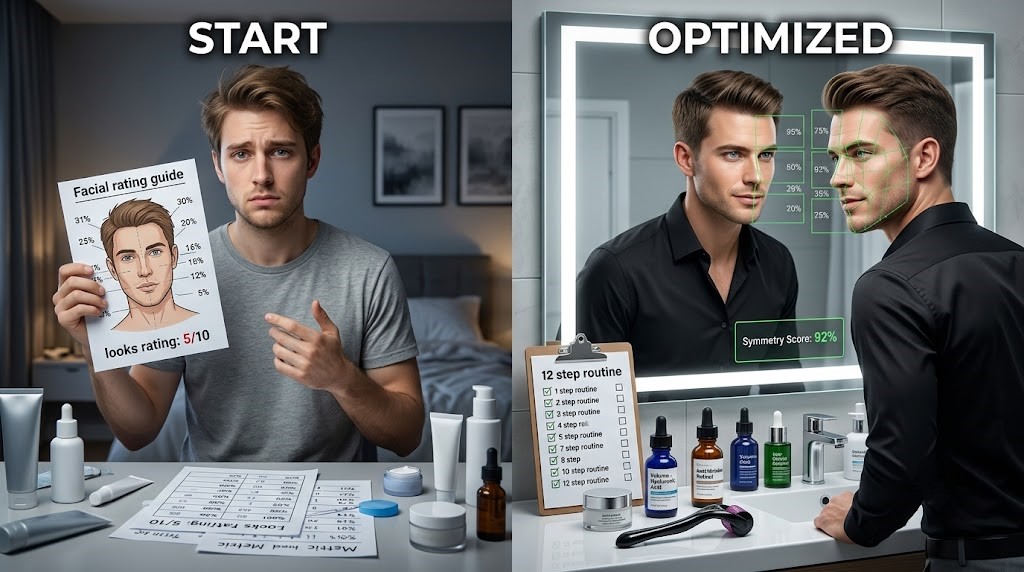
Looksmaxxing is when you treat your face like a project manager treats a quarterly report. Every feature gets audited. Jawline too soft? There’s a mewing routine for that. Skin dull? Retinol, vitamin C, and a $200 moisturizer. The word itself is ugly, industrial, and weirdly honest about what it’s trying to do: squeeze every possible point of attractiveness out of your genetics.
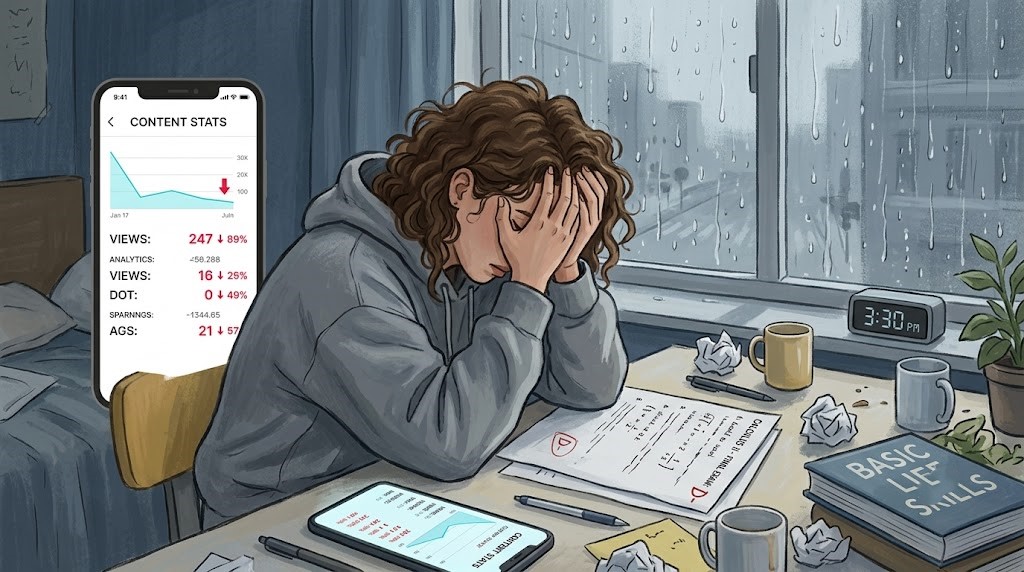
I first saw this term under a TikTok where a guy rated his own face with a PSL chart, pointing out his “failos” (flaws) like he was reading a damage report. The comments were a mix of encouragement and genuine concern. That was around early 2024, and by mid-2024 the hashtag had hundreds of millions of views. The movement started in men’s self-improvement corners of the internet, but it’s since spread to everyone. I’ve seen teenage girls on TikTok using looksmaxxing terminology to describe their skincare routines, which is both funny and slightly concerning.
Where did looksmaxxing come from?
The concept traces back to forums like Lookism.net and the broader “manosphere” in the early 2010s. Users would post photos of themselves and get brutally honest ratings, often with suggestions for improvement. The term itself, a portmanteau of “looks” and “maximizing,” emerged organically from these communities.
By 2023, TikTok creators had stripped away the most toxic elements and repackaged it as self-care. Kareem Shami, a TikTok creator with millions of followers, became one of the biggest voices promoting “softmaxxing,” the safer, non-surgical side of the trend. He’d post videos about skincare routines, proper sleep, and gym habits, all framed as accessible self-improvement rather than desperate genetic optimization.
The darker side never went away though. “Hardmaxxing” refers to surgical interventions, and some corners of the community still push extreme measures. In 2024, reports surfaced of young men practicing “bonesmashing,” hitting their own facial bones with blunt objects to reshape them. Plastic surgeons like Dr. Charles S. Lee publicly condemned the practice on TikTok, calling it dangerous and ineffective.
How people actually use looksmaxxing
The word gets used in two distinct ways. The first is genuine self-improvement. Someone posts a glow-up video showing their six-month skincare progress and captions it “softmaxxing journey.” The comments are supportive, if a little obsessed with symmetry.
The second usage is ironic or critical. You’ll see it in comments like “bro’s looksmaxxing his way to bankruptcy” under a video of someone listing $3,000 worth of skincare products. The humor comes from recognizing how absurd the optimization mindset can get when applied to a human face.
There’s also a whole taxonomy now. “Gymmaxxing” for working out, “sleepmaxxing” for optimizing rest, “moneymaxxing” for wealth, even “jestermaxxing” for compensating with humor. The suffix has become a meme format.
Why looksmaxxing blew up
TikTok’s algorithm loves transformation content. A before-and-after video with dramatic lighting and the right audio is basically guaranteed views. Looksmaxxing feeds directly into that. It also taps into a genuine anxiety: dating apps have made everyone hyper-aware of their own appearance in ways previous generations weren’t.
The trend peaked around mid-2024 when mainstream media started covering it. The New York Times, NPR, and Dazed all published pieces about the phenomenon. Supermodel Francisco Lachowski even spoke out against it on social media, warning his followers about the dangers of obsessive appearance optimization.
Not everyone’s a fan
The backlash is real and growing. Critics point out that looksmaxxing communities often promote Eurocentric beauty standards and can fuel body dysmorphia. The PSL rating system, which claims to objectively score attractiveness, has been criticized for being pseudo-scientific and racist. Technical terms like “recessed palate” or “protruding upper third” are often applied disproportionately to non-white features.
Mental health professionals have also raised alarms. The line between healthy self-care and obsessive body monitoring gets blurry fast. When you’re tracking your “hunter eyes” progress and comparing canthal tilt angles, you might have crossed from self-improvement into something darker.
Honestly? The softmaxxing side is fine. Skincare, gym, better posture. That’s just being an adult. It’s the hardmaxxing and the rating culture that feel predatory.
Related slang
- softmaxxing — The non-surgical side of looksmaxxing, focusing on grooming and lifestyle
- mogged — Getting outshined by someone better-looking, often used in looksmaxxing communities
- mewing — A tongue posture technique popularized in looksmaxxing circles
- glow up — A significant improvement in appearance over time