Usage & Context
“Mewing” refers to a viral wellness trend that involves maintaining proper tongue posture — specifically, pressing the entire tongue flat against the roof of the mouth — with the goal of improving facial structure and achieving a more defined jawline. The technique went from obscure orthodontic theory to one of TikTok’s most-discussed self-improvement trends, racking up over two billion hashtag views and spawning an entire subculture of facial aesthetics optimization.
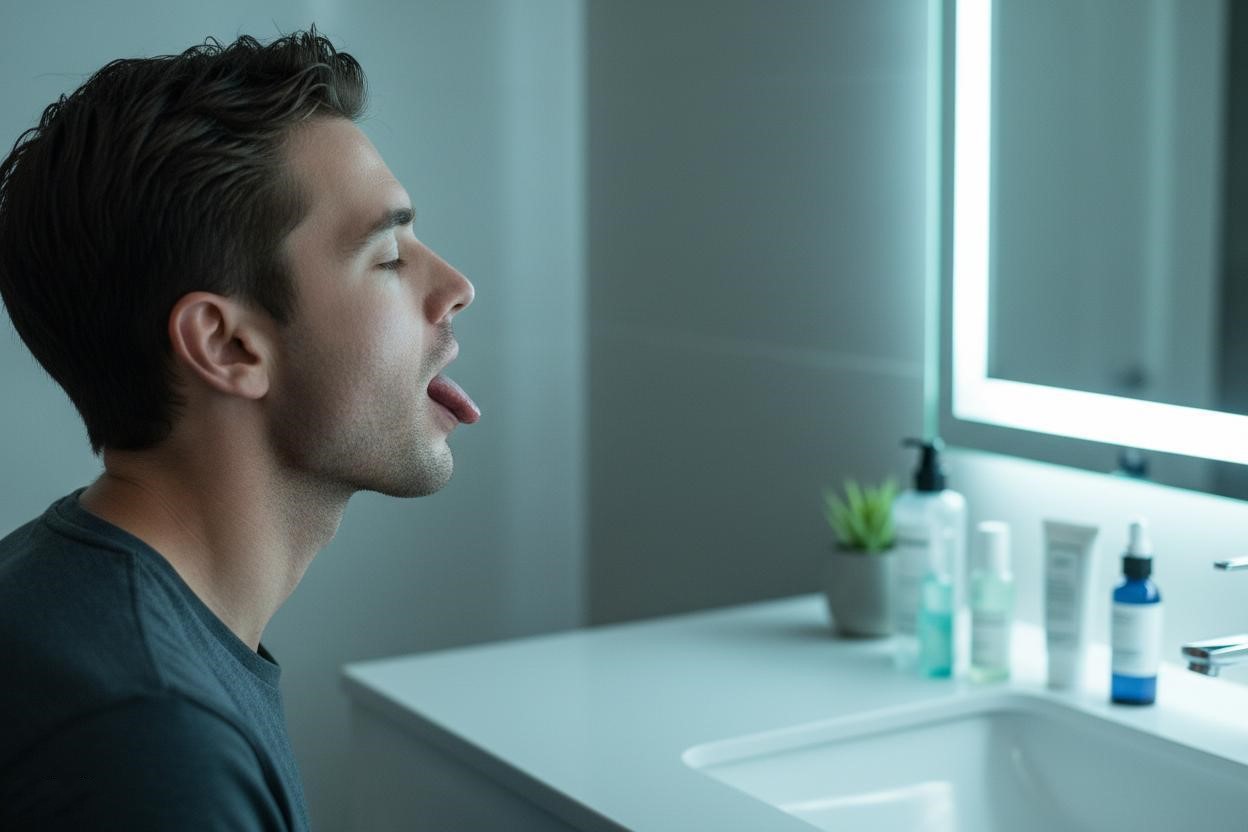
The basic practice is deceptively simple: rest your tongue against your palate, keep your lips gently sealed, breathe through your nose, and maintain light contact between your teeth. Proponents claim that consistent practice can gradually reshape the jawline, improve breathing, and enhance overall facial symmetry. Critics — including most professional orthodontists — argue that while proper tongue posture has genuine health benefits, the dramatic facial transformations shown in viral before-and-after videos are largely exaggerated or misattributed.
On TikTok, “mewing” appears in tutorial videos, transformation timelines, technique tips, and memes. The trend’s viral spread was fueled by its accessibility — unlike expensive cosmetic procedures or complex skincare routines, mewing requires no products, no appointments, and no money. It’s the ultimate democratic beauty hack: just you and your tongue.
TikTok Comment: “Started mewing 6 months ago and my breathing improved so much. The jawline gains are just a bonus.”
Group Chat: “Friend: Why are you pressing your tongue against the roof of your mouth? / Me: I’m mewing. It’s a whole thing. / Friend: …You’re weird. / Me: Check my jawline in 3 months and then apologize.”
Twitter/X Post: “Mewing is just posture correction for your face and I’m tired of pretending it’s controversial.”
Origin Story
The term “mewing” is named after British orthodontist Dr. John Mew, who first developed the concept in the 1970s as part of a broader system called orthotropics. Working alongside his son, Dr. Mike Mew, John Mew proposed that modern lifestyles — particularly soft diets, mouth breathing, and poor oral posture — were negatively impacting facial development. His theory suggested that proper tongue placement against the roof of the mouth could guide natural facial growth, especially in children and adolescents whose bones were still developing.
The Mews’ work remained largely confined to orthodontic circles for decades, receiving limited mainstream attention and significant skepticism. In 2019, the General Dental Council stripped John Mew of his dental license, citing his promotion of unproven claims. Despite — or perhaps because of — this professional censure, the Mews’ ideas gained traction in online self-improvement communities.
The true explosion occurred when TikTok users discovered mewing and transformed it from a niche orthodontic concept into a mainstream beauty phenomenon. The hashtag #mewing has since accumulated over two billion views. The trend emerged alongside and helped popularize a broader ecosystem of facial optimization practices collectively known as “looksmaxxing.” By mid-2026, mewing had evolved from a simple tongue posture technique into a comprehensive wellness practice with claimed benefits extending far beyond jawline definition.
Cultural Significance
Mewing captures a fundamental shift in how young people think about physical appearance. Previous generations associated beauty enhancement with consumption — buying creams, booking appointments, undergoing procedures. Mewing flips this paradigm entirely. It’s free, it’s natural, and it positions the individual as an active participant in their own transformation.
This DIY ethos resonates deeply with Gen-Z’s broader cultural values. Having come of age during economic uncertainty, this generation is skeptical of expensive solutions and drawn to hacks, workarounds, and self-directed improvement. Mewing fits perfectly into this mindset — it’s the facial equivalent of learning to code through YouTube tutorials or building a side hustle through TikTok advice.
GEBILAOWANG’s take: mewing sits at a fascinating intersection of legitimate health science and viral internet hype. The orthotropic principles underlying mewing are not pseudoscience — they’re supported by decades of research in craniofacial biology. Where things get murky is the leap from “tongue posture matters for children” to “adults can reshape their jawlines through tongue exercises.” The trend’s real value lies in its cultural impact: mewing has made an entire generation aware of how daily habits shape their bodies, and that body literacy is genuinely valuable regardless of whether anyone achieves the chiseled jawline of their dreams.
Related Slang
- Looksmaxxing — the broader practice of optimizing physical appearance
- Mogging — dominating someone through superior facial aesthetics
- Facemaxxing — optimizing facial appearance through various techniques
- Hunter eyes — a specific desired eye shape in looksmaxxing communities
- Face yoga — conceptually related but involves active exercises rather than passive posture
Frequently Asked Questions
What is mewing most similar to?
“Mewing” doesn’t have a direct predecessor, but it’s conceptually related to “face yoga” and “facial exercises.” However, mewing is distinct because it’s a passive posture technique rather than an active exercise routine. Unlike face yoga, which involves repetitive movements, mewing aims to retrain your default resting position.
Can discussing mewing offend someone?
Generally no, though context matters. The trend’s association with “looksmaxxing” culture — which some critics view as promoting unhealthy obsession with facial aesthetics — can make the topic sensitive. Suggesting someone should try mewing can be interpreted as implying their jawline needs improvement. The safest approach is to discuss mewing as a personal wellness practice rather than making it about anyone else’s appearance.
Is mewing a passing trend or here to stay?
GEBILAOWANG predicts the specific term “mewing” may evolve, but the underlying concept of tongue posture awareness is here to stay. The scientific legitimacy of orthotropic principles means the practice has substance beyond viral hype. The term may eventually be absorbed into broader wellness vocabulary — much like “mindfulness” expanded beyond its Buddhist origins.
How do you explain mewing to someone out of the loop?
“It’s a viral TikTok trend where you press your tongue against the roof of your mouth to try to improve your jawline. It comes from an old orthodontic theory and has billions of views, though dentists say the dramatic results are mostly exaggerated. Some people do report better breathing from it though.”
Pronunciation
/ˈmjuːɪŋ/
Sources
- CyberNews — Looksmaxxing on TikTok: The Cult of the Perfect Jawline https://cybernews.com/entertainment/looksmaxxing-tiktok-mewing-jawline/
- Get The Gloss — What Is Mewing? https://www.getthegloss.com/beauty/what-is-mewing/
- Altaloma Dental Care — Mewing Explained https://altalomadentalcare.com/blog/mewing/