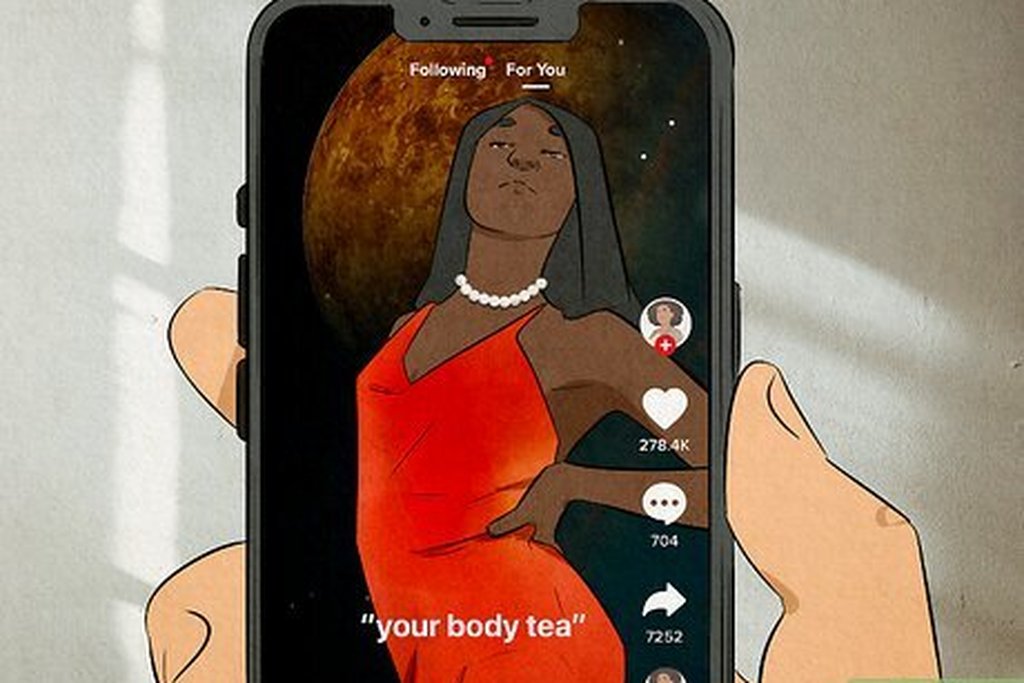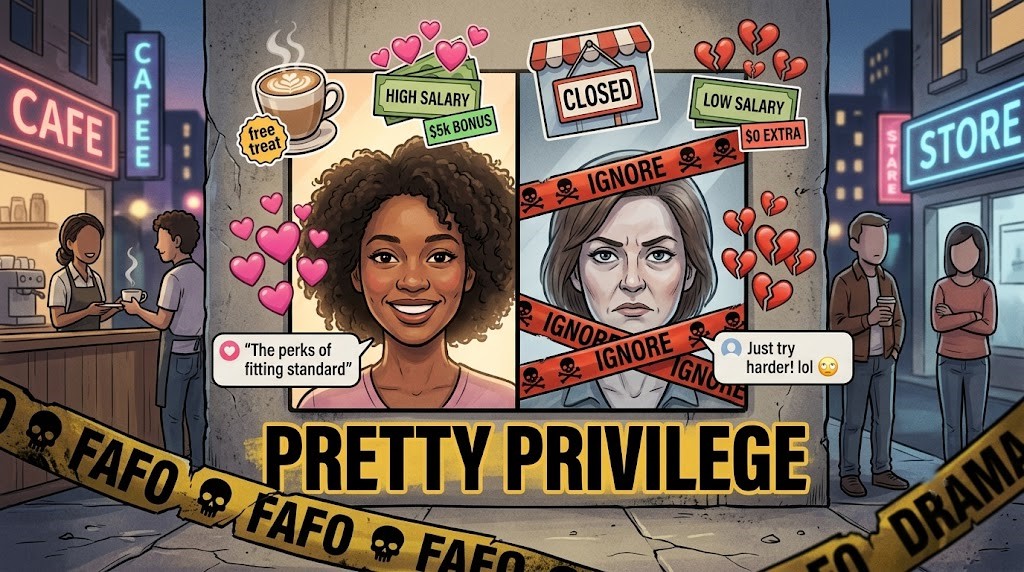
Pretty privilege is the idea that good-looking people get treated better. Not because they earned it. Just because their face fits a standard. If you’ve scrolled TikTok in the past year, you’ve seen the hashtag #prettyprivilege. Women posted videos about free coffee, better grades, and strangers carrying their suitcases. The comments were a war zone.
Pretty privilege: the origin
The term didn’t start on TikTok. Psychologists have studied the “halo effect” since 1972, where attractive people are assumed to be smarter, kinder, and more competent, which means that decades before anyone uploaded a “pretty privilege check” video, researchers already knew that symmetrical faces opened doors that talent alone couldn’t. The internet just gave it a catchy name. Pretty privilege entered mainstream conversation around 2020, but TikTok turned it into a genre. Model Madeline Ford went viral for exposing how influencers get “beauty passes” for free meals and products. The stitch chain that followed was endless.
By the numbers
The hashtag #prettyprivilege has accumulated over 300 million views on TikTok. A 2012 study cited in multiple articles found that attractive women receive up to four times more messages on dating apps. In the workplace, better-looking people earn an estimated 5% to 10% more than average-looking peers. These numbers get thrown around in every pretty privilege debate. Whether they explain the world or just depress people depends on who you ask.
I watched a video in May 2026 where a creator did a full face of makeup, went to a coffee shop, and documented the difference in service. The barista smiled more. The receipt had a heart drawn on it. Her “without makeup” video the next day got a flat “here you go.” The comments were split between “this proves it” and “you’re fishing for compliments.”
@username: went to the same coffee shop two days in a row. day 1: free upgrade. day 2: they spelled my name wrong on purpose. #prettyprivilege
The pretty privilege timeline
- 2020: The term gains traction on Instagram and Twitter alongside the body positivity movement.
- 2021-2022: TikTok creators start posting “pretty privilege check” videos. The format is simple: show the perks you get for being attractive.
- 2023: The backlash begins. Critics argue that pretty privilege videos are just humblebragging. Others point out that the movement is led by women who already fit beauty standards.
- 2024-2026: The conversation splits. Some creators use the term to discuss colorism and fatphobia. Others use it to get views. The algorithm doesn’t care which.
The conversation has also exposed a darker layer. Creators who don’t fit Eurocentric standards have pointed out that pretty privilege is inseparable from colorism and fatphobia. The hashtag #prettyprivilege might get 300 million views, but #darkskinprivilege doesn’t exist. The term has become a way to discuss intersectionality without using academic language. That’s its real power. Whether the views translate to actual change is still up for debate. But at least people are naming the thing.
Related slang
- Rizz — Pretty privilege gives you rizz whether you worked for it or not.
- Main Character Energy — Pretty privilege gives you main character energy by default.
- Delulu — Sometimes pretty privilege makes people delulu about how the world actually works.