Usage & Context
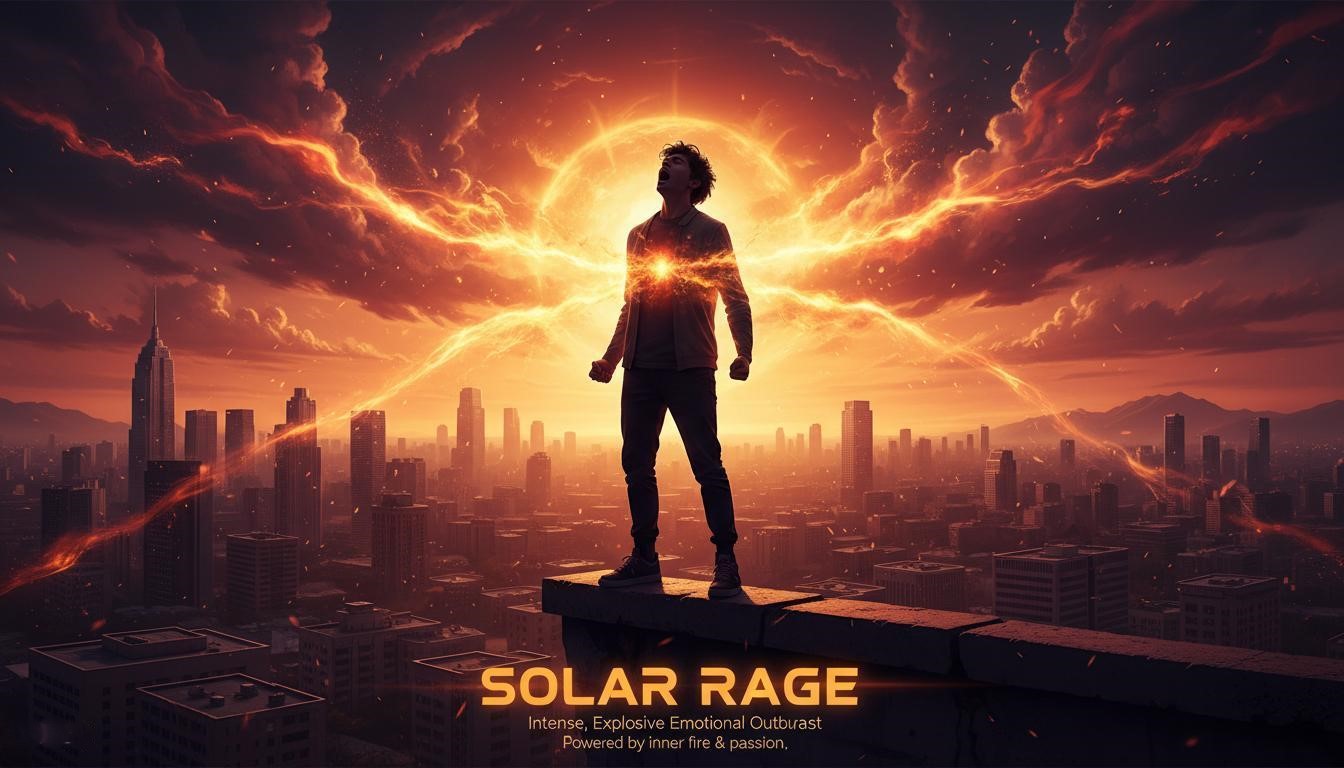
Solar rage is what happens when eco-anxiety meets Gen Z’s need to turn everything into content. It describes that specific flash of fury triggered by small, daily acts of environmental carelessness — someone tossing a battery in the trash, a fast fashion haul on your FYP, or a roommate running the dishwasher half-empty. The “solar” part nods to Gen Z’s astrology-adjacent vocabulary, framing the anger as planetary and cosmic rather than just personal irritation.
What makes solar rage distinct from regular environmental concern is its performative, postable nature — people document their solar rage moments in stories and TikToks, turning private frustration into shared commentary. On TikTok, the term appears in sustainability content, lifestyle commentary, and memes about environmental pet peeves.
The tone is key: solar rage is comedic, not preachy. It lets people vent about climate issues without sounding like a doomer or an activist. It’s eco-anxiety with a comedic release valve, which is exactly the tone that performs well on TikTok in 2026.
Story text overlay: “Bestie texted ‘driving 4 hours to get a matcha’ and I went full solar rage.”
Comment under a fast fashion video: “That haul just activated my solar rage. 47 polyester tops for a ‘summer refresh’??”
Origin Story
The term crystallized in early 2026 when sustainability creators started using it to caption moments of daily environmental frustration. It grew from the intersection of climate awareness content and Gen Z’s tendency to turn serious topics into meme-able slang. Unlike “eco-anxiety” (clinical dread) or “doomer” (giving up), solar rage positions environmental concern as active, loud, and slightly absurd — perfect for TikTok’s tone.
The hashtag #solarrage accumulated tens of millions of views between April and June 2026, with strongest adoption in the US, UK, and Australia among environmentally conscious Gen Z and young millennials aged 18–28.
Cultural Significance
Solar rage represents a new way of engaging with climate issues on social media. Previous environmental discourse on TikTok tended toward either clinical anxiety (eco-anxiety) or nihilistic surrender (doomerism). Solar rage offers a third path: righteous anger with a sense of humor.
GEBILAOWANG’s take: this term works because it lets people vent about climate issues without sounding preachy. It’s eco-anxiety with a comedic release valve, which is exactly the tone that performs well on TikTok in 2026. The term also reflects how Gen Z processes serious issues through humor — solar rage isn’t about solving climate change, it’s about finding community in shared frustration. That community-building function is more valuable than the individual posts.
Related Slang
- Eco-anxiety — the clinical, heavy predecessor; solar rage is its lighter, postable cousin
- Doomer — someone who has given up on environmental action; solar rage is the opposite energy
- Brain rot — sometimes paired with solar rage when the offending content is particularly mindless consumption
- “Touch grass” — advice to engage with nature; solar ragers already care about nature, they just express it differently
- Greenwashing — calling out fake environmentalism; solar rage targets genuine wastefulness
Frequently Asked Questions
What is “solar rage” most similar to?
It’s closest to “triggered” but more specific — solar rage is exclusively about environmental frustration, and it carries a comedic, performative tone that “triggered” doesn’t have. Unlike eco-anxiety, which is internal and heavy, solar rage is external and shareable.
What situations should you avoid using “solar rage” in?
Don’t use it to genuinely attack individuals over minor choices — that makes you look unhinged, not righteous. Also avoid using it during genuine environmental emergencies or disasters; making a joke during a wildfire makes you look tone-deaf. Save solar rage for everyday wastefulness, not crises.
How do you explain “solar rage” to someone out of the loop?
“It’s when you get comically mad about someone being wasteful, like leaving the AC on in an empty room or buying 47 fast fashion tops. It’s eco-anxiety with a sense of humor.”
Pronunciation
/ˈsoʊlər reɪdʒ/
Sources
- SlangWatch — “TikTok Slang 2026: The Language of Viral Culture” https://www.slangwatch.com/blog/tiktok-slang-2026
- TikTok Creative Center — Trending Keywords & Hashtags Dashboard https://ads.tiktok.com/business/en-US/solutions/tiktok-creative-center