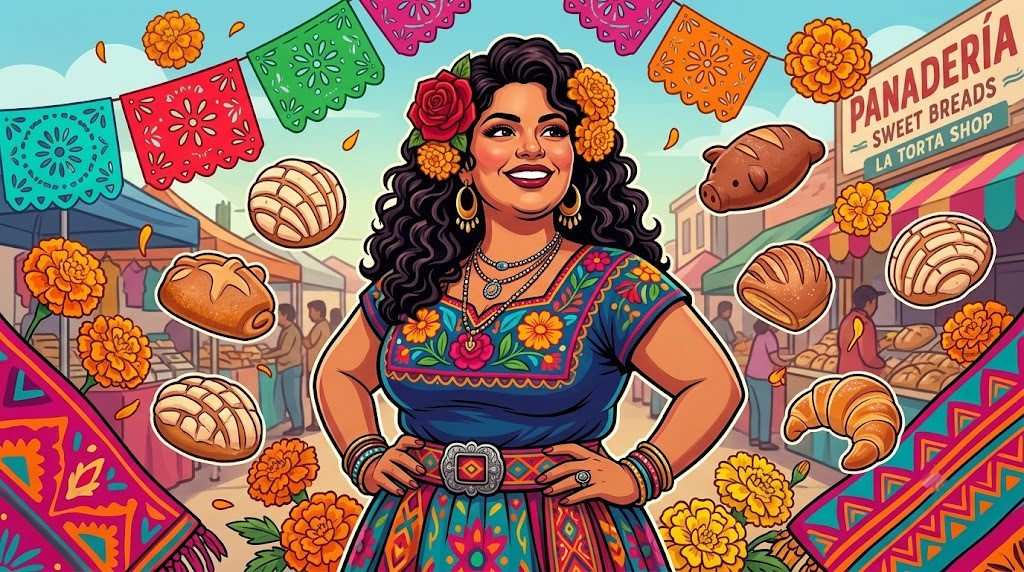
Torta is Mexican slang for a sandwich. But on TikTok, it means something completely different. If you grew up in a Latino community, you heard it as a put-down. In Chicano and Mexican-American communities, calling someone a torta has historically been a way to mock fuller-figured women. The logic is crude: a torta is thick and layered, so is the body. For years it was an insult. Then TikTok flipped it. Just like that.
Torta’s messy origin story
The body-shaming usage dates back to the early 2000s in cities like Los Angeles and San Antonio. Urban Dictionary entries from 2003 show the term used as a put-down, and it circulated through hip-hop lyrics and comedy routines, always with the same punchline: fatness as the joke. By the 2010s, it had become part of the vocabulary of Chicano slang, rarely questioned and widely understood as negative.
A quick timeline
- Early 2000s: Torta used as a body-shaming insult in Latino communities.
- 2010s: The term appears in hip-hop and barrio humor, still largely disrespectful.
- 2020-2023: Latina creators on TikTok start discussing the term openly. Some reclaim it. Some call out its use.
- 2024-2026: Full reclamation. The “torta girl” movement emerges. Hashtags like #tortagirl rack up millions of views. Women post videos declaring “I’m a torta and I’m proud,” celebrating curves and rejecting Eurocentric beauty standards.
The aesthetic side of the movement matters too. Torta girl style on TikTok means dark lip liner, winged eyeliner, gold jewelry, and form-fitting clothes that show the body rather than hide it. It’s a visual middle finger to the idea that curvy women should dress “modestly.” The confidence is the point. When a creator posts a torta girl outfit check, the comments fill with fire emojis and “proud of you” energy. That’s the reclamation working.
“POV: you and your friends are all tortas at 2 AM” — caption under a viral TikTok from June 2026
Not everyone’s a fan
The reclamation isn’t universal. Some Latina women argue that the term’s origins in shame mean it should never be normalized, regardless of intent. Others point to “torta pounder,” a related term that emerged in 2024 as a pun on McDonald’s Quarter Pounder, as proof that the word still carries objectifying baggage. The debate plays out constantly in comment sections. Can a slur be reclaimed if not everyone agrees? Torta is stuck in that argument.
I saw a video in June 2026 where a creator broke down crying after being called torta by a stranger. The comments were split. Half said reclaim it. Half said retire it. That’s where the word lives right now.
I also watched a torta girl aesthetic tutorial in July 2026 where the creator spent twelve minutes on eyeliner alone. The comment section had 3,000 replies and not a single “you’d look better thinner.” That never happens on beauty TikTok. The safe space is real, even if the word isn’t safe for everyone.
Related slang
- Gyatt — Also body-focused, but from a different corner of TikTok.
- Body Tea — When the conversation about torta turns into drama.
- Ate — Torta girls ate and left no crumbs.